The Wool Guide · Sleep & Textiles
Inside Mattress Toppers: How Layering Affects Sleep Comfort
A mattress topper is more than an extra layer. Its fiber, depth, and construction can subtly—or dramatically—change the way a bed feels, from the first moment you lie down to the temperature you notice at 3 a.m. Wool brings a particularly considered balance: cushioning with resilience, warmth with breathability, and a natural texture that rewards thoughtful care.
Published November 9, 2026
The quiet architecture of a comfortable bed
We tend to think of a mattress as the whole story. In practice, sleep comfort is shaped by a sequence of materials: the mattress beneath, the topper above it, then the fitted sheet and any other bedding layers. Each element contributes a different sensation. The mattress establishes the underlying support; the topper adjusts the surface; the sheet changes the immediate feel against the skin. Together, they form a small climate and cushioning system that responds to the sleeper and the room.
A topper can soften a surface that feels too firm, add a more yielding layer to an older mattress, or make a bed feel more even. It is not a replacement for a mattress that has lost structural support, nor can it correct every issue with alignment. But when the foundation is sound, changing the top layer can be an elegant, practical way to refine the experience without changing the entire bed.
That refinement depends on more than softness. The fiber, thickness, density, quilting, and attachment all shape how a topper behaves. A lofty layer may feel plush at first but compress differently from a denser one. A breathable fiber may feel less clammy than a material that holds moisture close to the body. The most useful question is not simply, “Is it soft?” but, “What kind of surface does this layer create, and how will it work with the rest of the bed?”
Why wool has a distinctive place in bedding
Wool is prized in bedding for a combination of qualities rather than a single effect. Its crimped fibers create small pockets of air, contributing to insulation and loft. Wool can also take up moisture vapor and release it gradually, helping the sleep surface feel less damp as conditions shift. Those characteristics make it a compelling natural fiber for people who want warmth without the sensation of a heavy, sealed-in layer.
In a mattress topper, wool’s spring and texture can provide gentle cushioning while retaining a degree of resilience. It is not necessarily the sinking, enveloping softness associated with some foams. Instead, the impression is often more buoyant and composed: a little give at the surface, with the mattress still perceptible beneath it. Whether that feels inviting depends on personal preference, body weight, sleep position, the mattress itself, and the topper’s specific construction.
Wool is also not one uniform material. Fiber diameter, staple length, processing, fill preparation, and the density of the finished layer all influence touch and performance. A topper filled with wool batting will not feel identical to one using loose wool clusters, just as a tightly quilted surface differs from a lofty, minimally restrained one. The word “wool” is a starting point—not a complete description.
Natural fibers can be appealing to readers seeking alternatives to synthetic bedding, but “natural” alone does not guarantee that a product suits every sleeper or every household. Certifications, fiber origins, processing methods, and care instructions are separate details worth examining. A careful label tells a fuller story than a material name by itself.
Thickness: a question of feel, not just height
Thickness is among the most visible specifications for mattress toppers, yet it is easy to read it too literally. A taller topper does not automatically provide better comfort. The amount of fill, how firmly it is packed, the quilting pattern, and the way the layer compresses under pressure all matter. Two toppers with similar measurements may feel quite different once they are on a bed.
A thinner layer may make a modest adjustment to the mattress surface without obscuring its original character. This can suit someone who likes their mattress but wants a touch more cushioning or a more textile-rich feel. A deeper, loftier layer is likely to make a more noticeable change, particularly on a firm mattress, though it may also alter how much the sleeper sinks into the surface.
It helps to consider the body’s pressure points rather than chase a particular height. Side sleepers often notice pressure around the shoulder and hip, while back and stomach sleepers may prefer a surface that preserves a steadier, more level sensation. These are tendencies, not rules: body shape, mattress firmness, and individual comfort preferences can change the equation. A topper should feel supportive as well as soft.
There is also the matter of fit. A thick topper can make fitted sheets difficult to secure, especially if the mattress is already deep. Check the mattress depth, the topper’s dimensions, and the fitted sheet’s pocket depth before introducing another layer. A topper that shifts or bunches is less likely to deliver a consistent surface, however lovely its materials may be.
Fill density and resilience: what happens under pressure
Density describes how much material occupies a given volume; resilience describes how readily a material recovers after compression. The two are related to feel but are not interchangeable. A well-constructed topper needs to distribute pressure in a way that remains comfortable throughout the night, then recover enough to maintain a reasonably even surface over time.
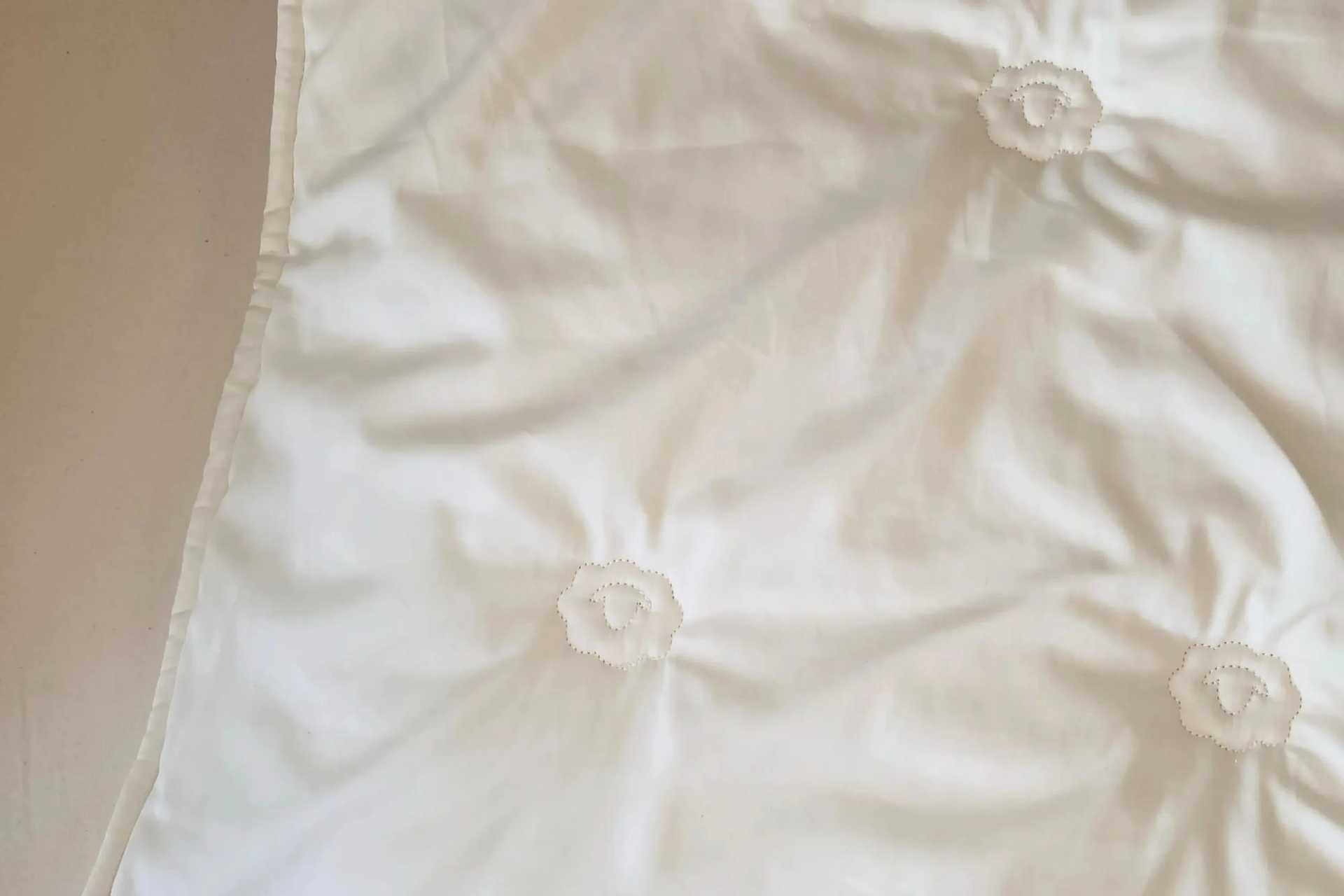
Wool fibers naturally have a degree of elasticity, but the finished topper’s behavior depends on how those fibers are prepared and held in place. Batting can create a more continuous layer. Cluster-style fill may offer a different kind of loft and response. Quilting or tufting can keep fill from migrating, while a less constrained construction may feel more pliable. Seams, channels, and perimeter finishing are not merely decorative details; they help determine whether the layer stays consistent.
When reading descriptions, look for practical specifics: fill composition, fill weight if provided, construction method, and whether the topper is intended to be spot-cleaned, aired, or washed. Vague language about “plushness” or “luxury” is less useful than information about what is inside and how it is assembled. If a specification is missing, that uncertainty is worth factoring into the decision.
Breathability and the feel of a sleeping climate
Comfort is partly a matter of temperature and moisture. A bed can feel too warm even when the room is cool, particularly if layers trap heat or moisture close to the body. Wool’s ability to insulate while managing moisture is one reason it appears in bedding across a range of climates. The effect is not air conditioning, and it cannot override the room’s temperature, sleepwear, duvet, or personal physiology. It can, however, contribute to a more balanced surface feel.
The complete stack matters. A breathable wool topper beneath a dense, heat-retaining mattress protector may not feel as airy as expected. Similarly, a heavy duvet can dominate the temperature experience even when the layers below are comparatively light. Sheets make a difference too: their fiber, weave, and weight influence how quickly heat and moisture move away from the skin.
For warm sleepers, the sensible approach is to consider the bed as a system rather than expecting a single material to solve overheating. Examine the topper’s cover as well as its fill, avoid adding unnecessary layers, and adjust the comforter seasonally. For someone who tends to feel cold, a more insulating combination may be welcome. The ideal arrangement is the one that feels steady over the night, not merely pleasant for the first few minutes.
Matching a topper to the mattress you already own
Begin with an honest assessment of the mattress. Is it fundamentally supportive but too firm at the surface? Does it feel uneven? Is it simply warmer than you would like? A topper can help fine-tune surface comfort, but persistent sagging, broken components, or a pronounced dip may point to a deeper problem. Adding a soft layer over a worn-out mattress can disguise the issue briefly without restoring its support.
Next, consider your usual sleeping position and how much movement you make. A surface that feels comfortable when lying still may feel different when turning from side to back. If you share a bed, remember that one person’s preferred softness may not be the other’s. A uniformly filled topper will create a shared surface, so differing temperature and firmness preferences may call for separate bedding choices rather than an increasingly elaborate set of layers.
- For a surface that feels too firm: look for cushioning and enough loft to soften first contact, without assuming that maximum thickness is best.
- For a mattress that already feels plush: prioritize a layer that adds a modest change rather than more sink.
- For temperature concerns: assess the cover, protector, sheets, and duvet alongside the topper’s fiber.
- For a bed that shifts: check dimensions, corner straps or other securing details, and the compatibility of the fitted sheet.
- For long-term use: read the care guidance before buying, especially if frequent washing is important to your household.
These are useful starting points, not promises of a particular outcome. Sleep comfort is personal, and there is no universal topper thickness or fiber that suits every body. Whenever possible, check return terms and trial conditions before committing. A layer that looks ideal on paper still needs to feel right in your own room, on your own mattress.
Caring for wool: less intervention, more attention
Care instructions vary considerably from one wool product to another. Some toppers are spot-clean only; others may allow careful washing under specific conditions. Never infer washability from the fiber alone. Construction, backing fabric, quilting, and any treatments can change what is safe, so the manufacturer’s label should take precedence over general advice.
For many wool-filled bedding layers, routine care can be gentler than frequent washing. A removable, washable protector helps shield the topper from perspiration and spills. Regular airing may refresh a layer, while prompt attention to small marks can prevent them from becoming harder to address. If the instructions recommend a specialist cleaner, treat that as part of the product’s practical ownership requirements.
Moisture and heat deserve particular caution. Aggressive agitation, high temperatures, or a dryer used against the label’s advice can cause shrinkage, felting, distortion, or clumping. If a topper is washable, follow the stated water temperature, cycle, detergent, and drying method exactly. It may also be too bulky for a standard household machine; attempting to force it into a washer can damage both the textile and the appliance.
Storage matters between seasons. Make sure a topper is completely dry before putting it away, then store it in a clean, breathable space in accordance with its care guidance. Avoid leaving natural fibers compressed or damp for extended periods. A little attention at the beginning can help preserve the loft and evenness that made the layer appealing in the first place.
Natural-fiber claims, read with discernment
Words such as “organic,” “responsibly sourced,” and “hypoallergenic” should be understood as claims that need context. Look for named standards and clarity about which components they cover. A certification may apply to the wool, the cotton shell, or the complete textile process; those are not automatically equivalent. Transparent information about fiber origin and manufacturing is more useful than an unqualified sustainability slogan.
Wool is often described as naturally resistant to certain common bedding concerns, but no material makes every sleep environment allergy-proof or maintenance-free. Individual sensitivities differ, and a person with a known wool sensitivity should consider direct contact, the cover fabric, and professional health advice where appropriate. A smooth, tightly woven cover can separate the sleeper from the fill, but it does not change the underlying material.
Natural fibers also have environmental trade-offs. Their impacts depend on animal husbandry, land management, processing, transport, product lifespan, and end-of-life options. A durable item used for many years may be preferable to one replaced frequently, but evaluating that responsibly requires more than a broad label. Ask what can be verified, how the product is made, and whether its care demands make long-term use realistic for you.
How a topper fits into the wider bedding ritual
Layering is not simply an exercise in adding softness. It is an arrangement of surfaces with different jobs. The mattress supports; the topper adjusts the feel; the protector helps guard against wear; the sheet sets the tactile first impression; and the duvet or blanket supplies warmth. When the arrangement feels wrong, it can be tempting to add another layer. Often the more revealing step is to identify which layer is causing the discomfort.
Too much warmth may come from the duvet rather than the topper. A rough or slippery sensation may be a sheet issue. A bed that feels unstable might need a better-fitting protector or a properly secured topper. Keeping the stack simple makes it easier to understand what is helping and what is not. It also makes seasonal adjustments less complicated: change the uppermost insulating layer before reconsidering the entire bed.
Scale is part of the style of a well-made bed, too. A topper should lie smoothly, with no ridges or exposed edges beneath the sheet. Its visual impact may be hidden, but its construction influences how neatly the bed is dressed and how consistently it feels. The best bedding layers are quietly competent: present in the sensation, scarcely noticeable in the setup.
A considered checklist before choosing
Before settling on a mattress topper, compare the details that determine daily use rather than relying on a single headline feature. Confirm the size and depth, identify the fill and cover materials, and find out how the layer is held together. Check whether the topper has ties, straps, or another means of staying in place. Consider the weight of the complete bed and whether changing sheets will remain manageable.
- What specific change do you want: more cushioning, a different surface texture, or a more balanced sense of warmth?
- How thick is the layer, and what does its construction suggest about its feel under pressure?
- Is the fill wool, a wool blend, or another material, and is that composition clearly stated?
- Does the cover support the breathability and softness you are seeking?
- What are the exact cleaning and drying instructions?
- Will your fitted sheets still fit securely over the mattress and topper together?
- Does the supplier offer enough information about sourcing, certifications, and returns to make an informed decision?
The final layer is the one you feel
A mattress topper can alter the character of a bed without asking you to start over. Its effect comes from the interaction of fiber, thickness, density, construction, and the layers around it. Wool is compelling because it offers a particular balance: a natural source of cushioning and insulation, with moisture-management qualities that can support a more comfortable sleep climate. Yet the right choice is not determined by fiber alone. It is measured by how the complete bed feels to you.
Think of the topper as a considered edit rather than a cure-all. Begin with the mattress you have, identify the sensation you want to change, and compare materials with an eye for construction and care. A well-chosen layer should make the bed feel more coherent: softer where you want give, steady where you need support, and comfortable across the changing hours of the night.